
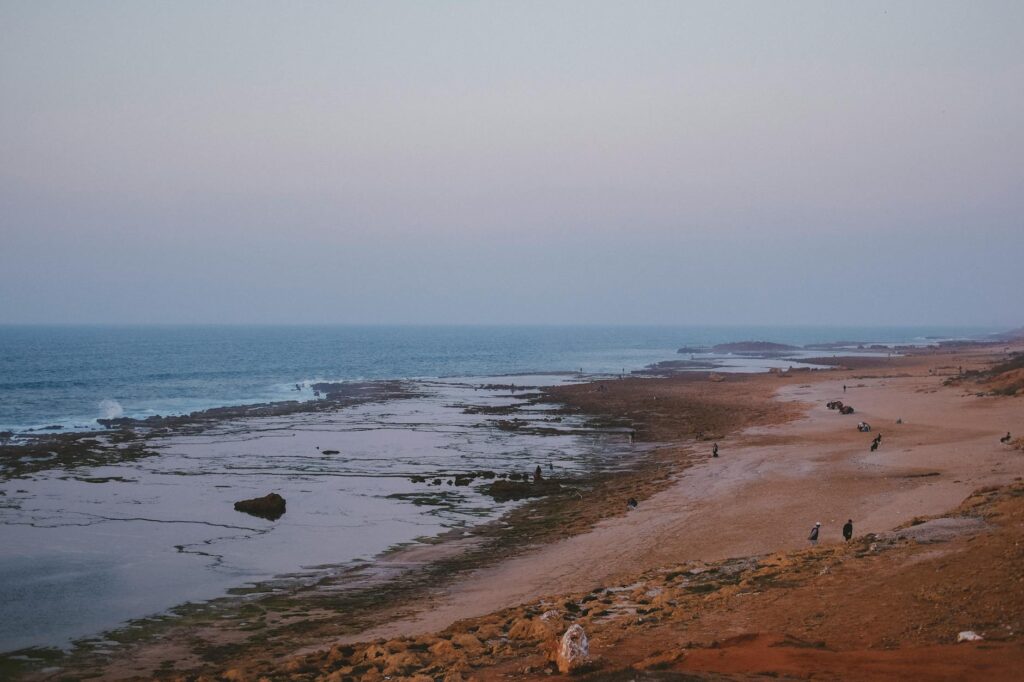
The best beaches in Morocco are the country’s best-kept secret. Most travelers arrive picturing souks, riads, and desert dunes and leave without ever seeing the 1,800 miles of coastline running along both the Atlantic and the Mediterranean, where you’ll find everything from wild surf breaks to quiet turquoise coves.
Having spent countless sun-drenched days exploring Morocco’s shores, I can tell you that each beach has its own distinct personality. Whether you’re chasing perfect waves, seeking a quiet stretch of sand for family time, or simply want to watch the sunset paint the Atlantic gold, Morocco delivers. Let me share the beaches that have stolen my heart and kept me coming back year after year.
Legzira Beach: Where Nature Creates Art
About 10 kilometers north of Sidi Ifni, Legzira Beach is the kind of place that makes you catch your breath. Famous for its dramatic red stone arches carved by centuries of wind and waves, this beach feels like stepping onto another planet. While one of the original arches collapsed in 2016, the remaining formation is still magnificent, glowing amber and crimson during golden hour.
The beach itself stretches for miles, with rusty-red cliffs backing golden sand that’s rarely crowded. Swimming here requires caution—the Atlantic currents can be strong—but for photographers, sunset chasers, and anyone who appreciates raw natural beauty, Legzira is unmissable. The small cafes perched on the cliffs serve fresh tagine and mint tea, making it easy to spend an entire day here. One honest note: the 12-kilometer dirt road to reach the beach can be rough, and facilities are basic, so come prepared.
Essaouira Beach: The Windy City’s Wild Shore
Essaouira’s sweeping crescent beach is legendary among windsurfers and kitesurfers, thanks to the powerful trade winds that blow almost constantly from April through November. Even if you’re not into water sports, there’s something magical about watching colorful kites dance against the whitewashed medina backdrop while camels plod along the shoreline.
The beach stretches for several kilometers, so you can easily find your own space even during peak season. The northern end near the medina gets busy with football games and horse rides, while walking south toward the sand dunes offers more solitude. Water temperatures hover around 18-21°C in summer—refreshing rather than warm—so pack accordingly. The real magic happens at sunset when the sky turns pink and locals gather to play, socialize, and simply enjoy the Atlantic breeze. Don’t miss fresh grilled sardines from the port afterward.
Taghazout: Morocco’s Surf Paradise
This laid-back fishing village turned surf mecca sits about 20 kilometers north of Agadir and has become the heart of Morocco’s surf scene. The coastline here is dotted with world-class breaks for all levels, from the gentle rollers at Panoramas perfect for beginners to the legendary right-hand point break at Anchor Point that draws experienced surfers from around the globe.
Beyond surfing, Taghazout maintains an irresistible bohemian charm with its blue fishing boats, rooftop yoga sessions, and smoothie bowls at beachfront cafes. The main beach in the village is small but photogenic, while nearby spots like Tamri and Imsouane offer longer stretches of sand. December through March brings the best swells, but the consistent waves and 300+ days of sunshine make this a year-round destination. The downside? Taghazout has grown rapidly, and during winter months, the surf lineup can feel crowded. Arriving early or exploring lesser-known breaks helps.
Asilah and the Northern Atlantic Coast
For a completely different Moroccan beach experience, head north to Asilah, a picturesque town where Portuguese ramparts meet Atlantic waves. Paradise Beach, just a few kilometers south of town, offers calm, family-friendly waters and soft sand that feels worlds away from the wild Atlantic further south.
The town itself is a joy to explore, with its whitewashed medina covered in colorful murals and art galleries tucked into narrow streets. Spanish and Portuguese influences blend with Moroccan traditions here, creating a unique cultural atmosphere. The beaches north toward Tangier, including Rmilat and the caves of Hercules area, offer dramatic rocky coastlines perfect for exploring. Summer weekends draw Moroccan families in droves, so weekdays offer a more peaceful experience.
Mediterranean Morocco: Saïdia and Beyond
Morocco’s Mediterranean coast often gets overlooked by international visitors, but the 14-kilometer stretch of golden sand at Saïdia—nicknamed Morocco’s Blue Pearl—rivals any beach in the Mediterranean. The water here is noticeably warmer and calmer than the Atlantic, making it ideal for swimming and families with young children.
Further west, the beaches around Al Hoceima offer a more rugged, undeveloped feel, with small coves framed by the Rif Mountains. Quemado Beach in town is lovely, but renting a car to explore hidden spots like Cala Iris reveals Morocco’s Mediterranean at its most pristine. These northern beaches shine brightest in summer, while the rest of Morocco’s coast enjoys pleasant temperatures year-round. Just know that tourist infrastructure here is more limited, with fewer English speakers and international-style accommodations.
Where to Stay for Your Morocco Beach Escape
Morocco offers accommodation to suit every style and budget along its coast. In Essaouira, riads within the medina put you steps from the beach while immersing you in traditional architecture—look for rooftop terraces with ocean views. Taghazout has exploded with surf camps and boutique hotels, many offering surf packages that include lessons, board rental, and airport transfers.
For a luxury beach escape, Agadir’s resort strip delivers international-standard hotels with pools, spas, and private beach access. In Saïdia, the modern marina development offers self-catering apartments perfect for families. Budget travelers will find simple but clean guesthouses in every coastal town. Check hotels →
Getting to Morocco’s Beaches
Most international visitors fly into Marrakech, Agadir, or Casablanca. Agadir Al Massira Airport is the most convenient gateway for southern Atlantic beaches, putting you within 20 minutes of Taghazout and a couple hours from Essaouira. Marrakech offers more flight options and is about 2.5 hours from Essaouira via a scenic drive.
For northern beaches, Tangier Ibn Battouta Airport serves Asilah and the Strait coast, while Nador or Oujda airports access the Mediterranean side. CTM buses connect major coastal towns affordably, though renting a car opens up the truly spectacular coastal drives and hidden beaches. Search flights →
Final Thoughts: Morocco’s Coastal Magic
Morocco’s beaches offer something increasingly rare: authentic experiences without the overwhelming crowds of more famous Mediterranean destinations. Yes, the Atlantic can be bracing and the infrastructure isn’t always polished, but that’s part of the charm. You’ll share the sand with local families, sip mint tea while watching fishermen haul in their catch, and discover that Morocco’s coast is every bit as captivating as its famous cities and deserts. Pack your sunscreen, bring an open mind, and let Morocco’s shores work their magic on you.
 Destinations12 Best Places to Travel Solo Female in US: 2025 GuideAfter years of solo travel across the country, we've found the US destinations where women traveling…
 DestinationsComplete Algarve Portugal Travel Guide: Beaches, Villages & Hidden GemsDiscover the best of Portugal's Algarve region with our complete travel guide covering beaches, towns, food,…
 DestinationsGreek Island Hopping 10-Day Route: The Ultimate Aegean AdventureDiscover the perfect 10-day Greek island hopping route through Naxos, Paros, Milos, and Santorini with practical…
Some links in this article are affiliate links — we only recommend things we would use ourselves, at no extra cost to you.