
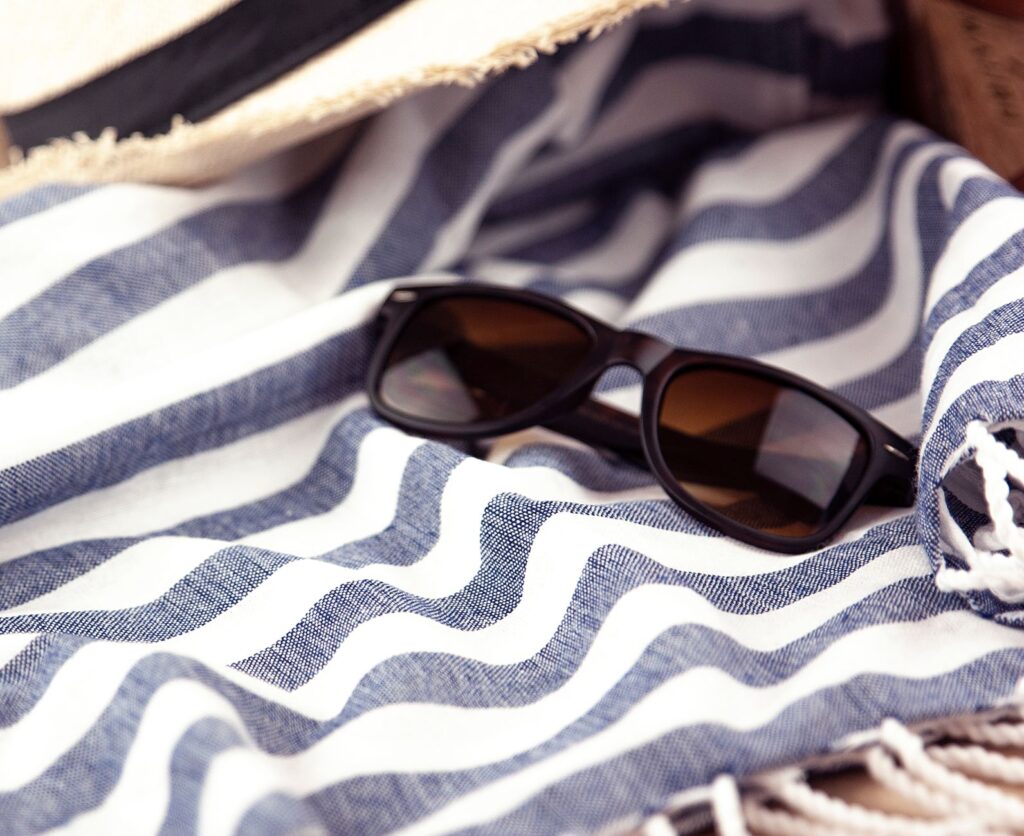
After years of chasing coastlines from Portugal to Thailand, we’ve learned exactly which beach essentials are worth packing and which just take up space. We’ve sunburned our shoulders in Bali, lost flip-flops to Greek waves, and finally figured out what actually makes a beach day comfortable when you’re traveling light. These are the beach essentials that have earned permanent spots in our bags through countless sandy adventures.
This isn’t a list of everything you could bring to the beach. It’s what we actually pack after learning the hard way what matters when you’re hopping between coastal towns with limited luggage space.
Quick-Dry Travel Towel
1. Microfiber Travel Towel
This was the first beach essential we upgraded, and we immediately understood why every seasoned traveler swears by these. A good microfiber towel dries in a few hours hung in your room, packs down to the size of a water bottle, and actually absorbs water unlike those thin cotton beach towels you find at tourist shops. We’ve been using the same one for three years across dozens of beaches.
Look for one that’s at least 60 by 30 inches so you can actually lie on it comfortably. The sand shakes off easily, which matters when you’re packing up to catch a bus to the next town. We keep ours in its stuff sack clipped to the outside of our daypack.
2. Sand-Free Beach Mat
We were skeptical about sand-free beach mats until we tried one on a particularly windy day in Tarifa. The mesh material lets sand fall through instead of sticking, which sounds gimmicky but genuinely works. When we shook it out, the sand just disappeared through the weave instead of flying into our faces and bag.
These are bulkier than microfiber towels, so we only pack one when we’re staying put at a beach destination for a week or more. For quick beach stops during multi-destination trips, the towel wins. But for extended beach time, especially with wind, these are brilliant.
Reef-Safe Sunscreen
3. Mineral Sunscreen
After snorkeling in dying coral reefs, we switched permanently to reef-safe sunscreen. Look for mineral-based formulas with zinc oxide or titanium dioxide, and avoid oxybenzone and octinoxate, which are banned in Hawaii and other places for good reason. They leave a slight white cast, but we’ve gotten used to it knowing we’re not contributing to reef bleaching. For more information on protecting marine ecosystems while traveling, check our guide to sustainable beach travel.
We apply a full coat 30 minutes before hitting the beach, then reapply every two hours and after swimming. The mineral formulas stay on better in water anyway. We go through about one bottle per week of daily beach time between the two of us.
4. Sun Protection Stick for Face
We keep a separate SPF stick just for our faces, especially our noses and the tops of our ears where we always seem to burn. The stick format means no greasy hands, and you can reapply without getting sunscreen in your eyes. We’ve found the sport formulas stay on better when you’re in and out of the water all day.
Packable Beach Bag
5. Mesh Beach Tote
Our beach bag needs to hold wet towels, sunscreen, snacks, and random shells we collect, then rinse clean and dry overnight. Mesh totes do exactly this. The water drains out, sand doesn’t accumulate in corners, and you can see everything inside so you’re not digging around for your sunglasses.
We bought a cheap one at a market in Split and it’s still going strong two years later. The key features are long shoulder straps that don’t dig in when the bag is heavy, and a zipper pocket for keys and cash. Everything else is just nice to have.
Waterproof Phone Pouch
6. Floating Waterproof Case
We’ve tested waterproof phone pouches in pools, oceans, and once accidentally in a washing machine. The ones that actually work have welded seams, not just a ziplock-style closure. We look for floating models with a bright color so if we drop it in the water, we can spot it immediately.
Test yours at home first. Fill the pouch with paper towels and submerge it in your sink for 30 minutes. If the paper stays dry, you’re good. We can use our phones through the clear plastic for photos and navigation, though the touchscreen is less responsive underwater.
Wide-Brim Sun Hat
7. Packable Sun Hat
Baseball caps don’t cut it at the beach. Your ears, neck, and face need real coverage, which means a hat with at least a three-inch brim all the way around. We’ve gone through several before finding packable styles that hold their shape after being stuffed in a bag.
Look for hats with a chin strap or adjustable cord. We lost two hats to ocean breezes before learning this lesson on a cliff beach in the Algarve. The wind came up suddenly and carried our hats straight into the Atlantic.
Quality Sunglasses
8. Polarized Sunglasses with UV Protection
We cheaped out on sunglasses for years until an optometrist friend explained the damage cheap lenses can do. Your pupils dilate behind dark lenses, and if those lenses don’t actually block UV rays, you’re exposing your eyes to more harm than wearing no sunglasses at all. Now we invest in proper polarized lenses with 100 percent UV protection.
Polarized lenses cut the glare off water, which makes a huge difference when you’re on the beach all day. We can actually see into the water to spot fish and rocks. The floating neck strap attachment we added has saved our sunglasses from the ocean floor at least three times.
Lightweight Beach Blanket
9. Parachute Nylon Beach Blanket
These thin nylon blankets pack incredibly small but spread out large enough for two people and all your gear. They come with corner pockets where you fill them with sand to anchor the blanket on windy days. We’ve used ours as a picnic blanket, emergency rain cover, and even a changing curtain when beach facilities were lacking.
The parachute material dries fast and shakes clean easily. We prefer the blanket-towel combo approach: blanket to sit on and keep sand away from our stuff, towel for actually drying off after swimming. Both pack smaller than a single cotton beach towel.
Reusable Water Bottle
10. Insulated Water Bottle
Cold water at the beach is non-negotiable for us after too many days drinking warm water that tasted like plastic. An insulated bottle keeps water cold for hours even in direct sun. We freeze ours overnight when we have a hostel freezer available, and it stays cold well into the afternoon.
Get one with a wide mouth so you can add ice cubes, and a loop handle for easy carrying. We clip ours to our beach bag with a carabiner. The 32-ounce size is our sweet spot: enough water for several hours but not so heavy we don’t want to carry it.
Portable Bluetooth Speaker
11. Waterproof Bluetooth Speaker
Music improves every beach day, but only if you’re respectful about volume and distance from other people. We keep ours at conversation level and move away from crowds. A good waterproof speaker survives splashes, sand, and the occasional rogue wave.
Battery life matters more than sound quality for beach speakers. Ours runs for 12 hours, enough for multiple beach days between charges. We’ve been using the same rugged model for two years, and despite countless drops in sand and a full ocean dunking in Bali, it still works perfectly.
After-Sun Care
12. Aloe Vera Gel and Moisturizer
Even with perfect sunscreen application, skin takes a beating from sun, salt, and wind. We shower immediately after the beach to rinse off salt, then apply aloe vera gel while our skin is still damp. It helps prevent that tight, dried-out feeling and reduces any redness from sun exposure.
We buy pure aloe vera gel or even fresh aloe leaves at local markets when we’re in tropical destinations. The bright green gel with added chemicals works fine, but pure aloe absorbs better and doesn’t leave a sticky residue. Follow with a good body moisturizer before bed.
Dry Bag
13. Roll-Top Dry Bag
A small five-liter dry bag lives inside our beach bag and holds everything that absolutely cannot get wet: phone, wallet, keys, camera. The roll-top closure creates a waterproof seal when you roll it down three times and clip it. We’ve had waves crash over our beach setup, and everything inside stayed completely dry.
The bright color makes it easy to spot in our bag, and it doubles as a pillow when we fill it with our towel. We’ve also used it for kayaking day trips and boat tours when we need to protect gear from water, as covered in our water activity gear guide.
Good Flip-Flops
14. Supportive Flip-Flops
Cheap flip-flops destroy your feet when you’re walking to beaches, across hot sand, and through coastal towns every day. We upgraded to flip-flops with actual arch support and cushioned soles, and our feet stopped aching after long beach days. The difference is dramatic.
Look for flip-flops with a textured footbed that grips when wet, and straps that won’t blow out after a month of daily use. We each go through one pair per year of heavy travel, which seems reasonable for footwear we wear almost daily in warm climates. The thong strap shouldn’t rub between your toes even on long walks.
Rash Guard or Swim Shirt
15. Long-Sleeve Rash Guard
We started wearing rash guards after repeatedly burning our shoulders and backs despite reapplying sunscreen. The long-sleeve shirts with UPF 50 protection mean we only need to apply sunscreen to exposed skin: face, hands, lower legs. It’s less hassle, more effective, and better for the environment since we use less sunscreen.
Rash guards dry quickly and pack small. We wear them for snorkeling, swimming, and even just lying on the beach during peak sun hours. The fitted styles work better than loose shirts, which balloon up with water and create drag when you’re swimming. Dark colors hide any stains from sunscreen or sand.
Packing Your Beach Essentials
We keep all our beach gear together in a packing cube or mesh bag inside our main backpack. This way, we can grab the entire beach kit when we’re heading out for the day without hunting through our luggage for individual items. The microfiber towel and beach blanket compress the most, so we use them to wrap fragile items like sunglasses or our speaker.
Everything on this list fits into a standard 40-liter backpack along with a week of clothes. We’ve done three-month trips with just this setup, buying anything extra we need at local markets. The key is choosing multi-use items and being realistic about what you’ll actually use versus what sounds good in theory.
Where to Buy Beach Essentials
We build our beach kit over time rather than buying everything at once. Most items we’ve found at outdoor retailers, though we’ve picked up some of our favorite pieces at local markets in beach destinations where the gear is designed for daily tropical use, not occasional vacation wear.
Before flying to a beach destination, we check what’s readily available there. Flip-flops, beach bags, hats, and sunscreen are almost always cheaper at local shops than buying premium versions at home and packing them. We invest in quality microfiber towels, waterproof bags, and sun protection clothing before we leave, then supplement with local finds.
Beach towns always have at least one shop selling tourist beach gear. The quality varies, but you can usually find decent mesh bags, simple dry bags, and basic sunscreen. We’ve replaced lost or broken items this way dozens of times across different countries.
Costs for Beach Essentials
| Item | Budget Option | Quality Option |
|---|---|---|
| Microfiber Towel | 15 dollars | 30 dollars |
| Reef-Safe Sunscreen | 12 dollars | 20 dollars |
| Beach Bag | 10 dollars | 25 dollars |
| Waterproof Phone Pouch | 8 dollars | 15 dollars |
| Sun Hat | 15 dollars | 35 dollars |
| Polarized Sunglasses | 25 dollars | 80 dollars |
| Beach Blanket | 20 dollars | 40 dollars |
| Insulated Water Bottle | 20 dollars | 35 dollars |
| Bluetooth Speaker | 25 dollars | 60 dollars |
| Dry Bag | 12 dollars | 25 dollars |
| Rash Guard | 20 dollars | 45 dollars |
We’ve learned that spending more upfront on items that protect your expensive gear like waterproof pouches and dry bags is worth it. Replacing a phone costs infinitely more than buying a quality waterproof case. But for items like beach bags and blankets, mid-range options work perfectly fine and last for years.
Best Time to Visit Beach Destinations
The ideal beach season varies wildly depending on where you’re going. We’ve chased summer around the globe and learned that shoulder seasons often provide the best beach experiences with fewer crowds and still-great weather.
Mediterranean beaches are perfect from May through early October, with July and August being packed with European holiday crowds. Southeast Asian beaches have complex seasons: Thailand’s west coast is best from November to April, while the east coast flips to May through October. Caribbean beaches work year-round but hurricane season from June to November brings risk and sometimes storms.
We prefer visiting beach destinations in shoulder months like May, September, and October in the northern hemisphere. The water is still warm, beaches are less crowded, and prices for accommodation drop significantly. We’ve had entire beaches to ourselves in Greece in early October when the weather was still perfect for swimming.
Frequently Asked Questions
What are the most important beach essentials for travelers?
The absolute essentials are reef-safe sunscreen, a quick-dry towel, reusable water bottle, sun hat, and a waterproof pouch for your phone. Everything else enhances your beach day, but these five items keep you protected and comfortable. We never head to a beach without all five, even for a quick afternoon visit.
How do you pack beach essentials when traveling light?
Choose items that compress small and serve multiple purposes. A microfiber towel packs smaller than a book, parachute nylon blankets fold into pouches the size of your fist, and mesh bags weigh almost nothing. We keep all our beach gear in one packing cube that’s maybe 15 percent of our total pack volume. Skip bulky items and buy cheap local versions if you need extras like beach toys or spare towels.
What makes sunscreen reef-safe?
Reef-safe sunscreen uses mineral blockers like zinc oxide or titanium dioxide instead of chemical filters like oxybenzone and octinoxate that damage coral. Look for labels that specifically say reef-safe, reef-friendly, or ocean-safe. The mineral formulas create a physical barrier on your skin rather than absorbing into it, which is why they leave a slight white cast but work immediately upon application.
Do you really need a special beach towel for travel?
After trying both, absolutely yes. Regular cotton towels take forever to dry, get mildewy in humid climates, take up half your bag, and stay damp and heavy all day. Microfiber travel towels dry in a few hours, pack tiny, weigh almost nothing, and actually absorb water well. The upgrade costs about 25 dollars and makes beach travel infinitely more pleasant. We’d choose our travel towel over a cotton one even if size and weight weren’t factors.
How much should I spend on beach essentials?
You can build a complete beach kit for 150 to 200 dollars if you shop smart and skip premium brands. Invest more in items that protect expensive gear or your health, like waterproof bags, sunglasses, and quality sunscreen. Save money on things like beach bags, hats, and blankets where mid-range options work fine. We’ve used the same core beach essentials for years, so the per-trip cost is minimal after the initial investment.
What beach essentials can I buy locally instead of packing?
Flip-flops, beach bags, hats, regular sunscreen, and cheap towels are available everywhere tourists gather. We often wait to buy these items at our destination where they’re designed for local conditions and usually cheaper than tourist versions back home. But pack your microfiber towel, reef-safe sunscreen, waterproof pouches, and quality sunglasses since these are harder to find or more expensive at beach destinations. Local markets also sell great sarongs, beach mats, and simple dry bags.
Our Travel Resources
After years of beach hopping, we’ve streamlined how we plan and book our coastal adventures. We typically search for flights about two to three months in advance for international beach destinations, and we’re flexible with our dates to catch better prices. Shoulder season flights to beach destinations are often half the price of peak summer travel.
For accommodation near beaches, we look for places within walking distance of the sand or on reliable public transport routes. Staying slightly inland often saves significant money while keeping you close enough for multiple daily beach visits. We read recent reviews specifically mentioning beach access, shower quality for rinsing off salt, and whether rooms have space to dry wet gear.
Travel insurance matters more for beach destinations than we initially realized. Our policy covers lost or stolen items, which is crucial when you’re carrying phones and cameras to the beach. We’ve also used the medical coverage twice for minor injuries: a badly cut foot from rocks in Croatia and an infected sandfly bite in Thailand. Beach destinations come with specific risks that make coverage worthwhile.
We book local transport and activities after arriving rather than pre-booking online. Beach towns always have boat tours, snorkel trips, and equipment rentals available for walk-ups at better prices than online advance bookings. The exception is popular destinations during peak season where specific tours or beach clubs sell out, but even then we book just a day or two ahead.
 UncategorizedSun Poisoning Symptoms: What Every Traveler Should Know (2025 Guide)After years of chasing sun-soaked destinations, we've seen firsthand how quickly a perfect beach day can…
 UncategorizedSingles Vacations: The Solo Traveler’s Guide (2026 Best Trips)Singles vacations aren't just about traveling alone—they're about the freedom to explore on your terms while…
 Uncategorized12 Best Things to Do in Marrakech, Morocco (2026 Guide)Marrakech hit us with a sensory overload the moment we stepped into the medina—saffron-scented air, the…
Some links in this article are affiliate links — we only recommend things we would use ourselves, at no extra cost to you.